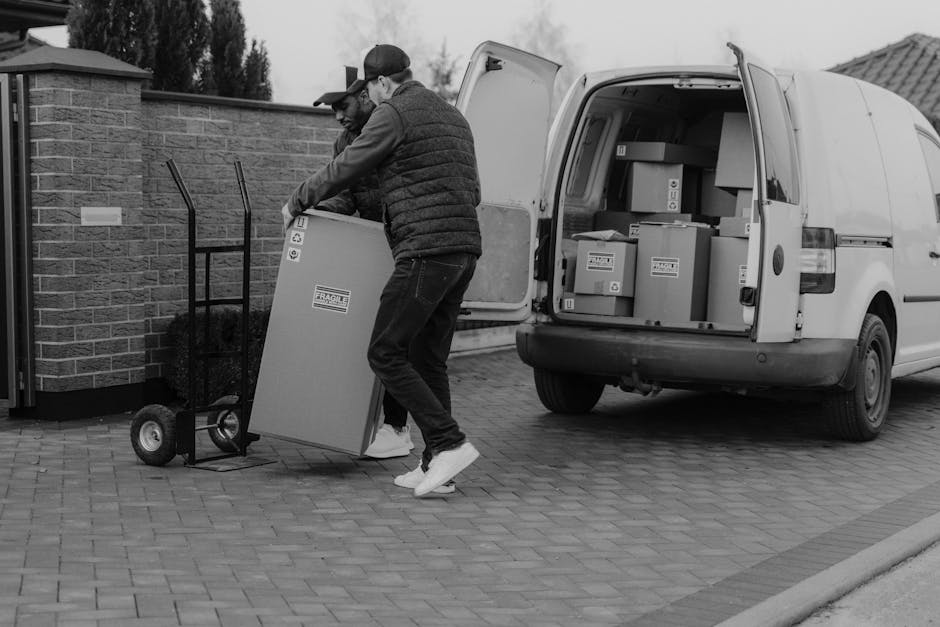
Pimlico office moves: man with van for small businesses

If you run a small business in Pimlico, moving an office can feel like one of those jobs that should be simple, and then somehow isn't. Desks need lifting, laptops need protecting, paperwork still exists, and the day-to-day work does not pause just because you've got boxes in the corridor. That is where Pimlico office moves: man with van for small businesses becomes a very practical option. It is a compact, flexible way to move office equipment, furniture, and business essentials without paying for more vehicle space or more labour than you actually need.
Done well, it can save time, reduce disruption, and keep the move calm enough that your team can keep functioning. Done badly, it becomes a scramble of forgotten cables, awkward parking, and a printer that somehow ends up on the wrong floor. Truth be told, most small office moves are less about brute force and more about good sequencing. This guide walks through how the service works, when it makes sense, what to watch out for, and how to make the move feel organised rather than chaotic.
Along the way, you'll also find practical tips on planning, compliance, costs, and the small details that are easy to miss until the last minute. Those little details matter. They really do.
Why Pimlico office moves: man with van for small businesses Matters
Pimlico has a very specific feel to it: central, busy, a bit elegant, and often tighter on space than people expect. For small businesses, that means an office move isn't just a transport job. It's a logistics job shaped by narrow streets, limited stopping space, staircases, lift bookings, and the need to keep neighbours, landlords, and staff all onside. A man with van setup is often a sensible match because it is proportionate. You get enough capacity for a modest office move without bringing in a huge operation that feels over-engineered for the task.
That matters because small businesses tend to have a different rhythm from larger companies. You may be moving a studio, a two-room office, a consultancy space, a small practice, or a workspace with only a handful of desks. In those situations, efficiency matters more than sheer scale. You want a service that can handle desks, monitors, filing boxes, chairs, and perhaps a few awkward items without turning the move into a full-blown production.
There is also the business continuity angle. Every hour spent moving is an hour not spent serving customers, answering emails, or selling. If you can keep the move compact and controlled, you are less likely to lose a day to disruption. And let's face it, nobody wants a client meeting interrupted by a forklift-sized logistics drama.
Pimlico office moves also benefit from local awareness. A team used to London access issues will think about loading points, building access times, parking pressure, and the fact that "just pop round the back" is not always possible. In a place like Pimlico, that local realism is worth a lot.
Expert summary: For small offices, the best move is usually not the biggest one. It is the one that is planned around your actual furniture, your working hours, and the quirks of the building you're leaving and the one you're entering.
How Pimlico office moves: man with van for small businesses Works
At its core, the process is straightforward. A driver or small moving team arrives with a van sized for your office contents, loads the items safely, transports them, and unloads them at the new premises. But the smooth version of that story depends on preparation. Quite a lot of preparation, if we're being honest.
Most office moves using a van-based service follow a simple sequence:
- Initial assessment: You list the items to move, including furniture, tech, archive boxes, and any awkward pieces like planters or large monitors.
- Access check: Someone looks at both addresses, or at least asks detailed questions about stairs, lifts, loading bays, parking restrictions, and entry points.
- Scheduling: The move is timed to reduce disruption, often outside peak business hours or in a controlled half-day slot.
- Packing and protection: Fragile items, IT equipment, and surfaces are protected with wraps, boxes, blankets, or sleeves.
- Loading: Heavier items go first, delicate items are secured, and everything is stacked to avoid shifting in transit.
- Delivery and placement: Items are unloaded in the right rooms or work areas so your team can restart quickly.
In practical terms, this is less about "moving van" and more about "compact relocation workflow". That's the useful bit. A good service should help you reduce double handling, protect equipment, and avoid the kind of movement that makes an office feel like a half-finished renovation for three days.
If your office includes heavier or mixed-use items, a broader service such as office removals or even wider commercial moves may be more appropriate. For smaller loads, though, the van-based approach is often the cleaner fit.
Key Benefits and Practical Advantages
The biggest reason small businesses choose this approach is not just price. It is fit. A smaller-scale office move should feel nimble, not oversized. When the service matches the job, the whole experience tends to be less stressful.
- Better value for modest moves: If you are relocating a small team, a studio, or a compact office, you may not need a full removal truck.
- Faster scheduling: Smaller moves are often easier to fit into a tight timetable, especially when you are working around leases, handovers, or a Friday evening switch.
- More flexibility: A van-based move can be more adaptable for awkward access, short notice, or partial relocations.
- Less disruption: You can move only what is needed and keep the rest of the business running.
- Local practicality: In central London, smaller vehicles can sometimes be easier to manage in tight streets and constrained loading areas.
There is another benefit that people sometimes overlook: psychological momentum. Small business owners often feel stuck when the move looks huge. A smaller, simpler transport plan makes the whole thing feel manageable. That matters. If the move feels manageable, teams cooperate better and decisions get made faster.
For businesses that also need help with packing, the combination of a van and a packing support option can be even better. Services like packing and unpacking services can save a surprising amount of time, especially if you have a few fragile items or a tight handover deadline.
Who This Is For and When It Makes Sense
This kind of office move works especially well for businesses that are small enough to avoid a full-scale relocation, but important enough that the move still needs to be handled properly. That is the sweet spot.
It makes sense for:
- consultancies with a handful of desks
- design or creative studios
- accountancy, legal support, or professional services offices
- small retail back offices
- startups moving from shared space to their own office
- teams consolidating two workspaces into one smaller unit
- businesses relocating a few essential items rather than a whole floor
It also works when you need to move in phases. For example, you might move laptops and documents first, then furniture later, then archive storage another day. That kind of staged approach is common in small business moves, and honestly, it often works better than trying to do everything at once.
Where it may be less suitable is when you have lots of specialist equipment, substantial filing, server racks, or multiple departments moving together. In those cases, a more comprehensive office relocation plan is usually smarter. The point is not to force a van to do the job of a larger moving operation. That is how people end up calling for "just one more trip", which is rarely anyone's favourite phrase.
If your move is broader in scope, an office relocation services page is worth considering because it may align better with the size and complexity of the job.
Step-by-Step Guidance
A small office move feels far easier when broken into steps. You do not need to do everything at once. In fact, trying to do everything at once is usually how small moves become messy.
1. Make a room-by-room inventory
Walk through the office and list what is actually moving. Don't guess. Count desks, chairs, monitors, boxes, printers, and anything bulky. Note which items are fragile or awkward. A simple spreadsheet is often enough, and it can save real time later.
2. Decide what is staying behind
Small businesses often carry more than they need. Old filing cabinets, duplicate chairs, dead electronics, and broken office bits have a habit of hanging around. Be ruthless, gently. If an item hasn't earned its place, don't spend money moving it.
3. Check access at both locations
Measure doorways if needed, ask about lifts, and check loading restrictions. In Pimlico, access can be the difference between a smooth hour and a frustrating afternoon. It is worth confirming whether the van can stop close enough to the entrance and whether there are time limits on loading.
4. Protect your equipment
Laptops, screens, and small IT equipment should be boxed securely. If you are moving hardware that matters to the business, keep cables grouped and labelled. A tiny label now can prevent a half-hour hunt later. That one is common sense, yet somehow still gets forgotten.
5. Schedule the move with your business hours in mind
Choose a time that protects your clients and your team. Some businesses move after closing, some on a quiet morning, and some in stages. A half-day move often works well for small offices because it leaves room to sort the new space without rushing.
6. Load in the right order
Heavier, sturdier items should usually go first, with delicate items and easy-to-lose boxes positioned safely. You want the van packed so that nothing shifts and nothing gets buried under the one box everyone needs first.
7. Set up the new space before anyone arrives
If possible, clear the reception area, place desks where they belong, and set out the essentials. A little organisation on arrival can make the first morning in the new office feel calmer. People notice this more than they say they do.
If you are comparing moving support options, a standard moving van may be enough for compact office contents, while something like moving van or man with van services can be a good middle ground between solo DIY and full removal teams.
Expert Tips for Better Results
Small office moves go more smoothly when the planning is almost boring. That is not glamorous, but it works.
- Label by destination, not just by contents. "Kitchen", "Reception", "Accounts", and "IT" are more helpful than "Box 7".
- Keep critical items separate. Chargers, keys, access cards, and passwords should not be packed away with random stationery.
- Photograph cable setups before unplugging anything. Yes, it's a bit mundane. Also incredibly useful.
- Plan for one unexpected issue. A lift that is too small, a box that is heavier than expected, a road restriction you missed-something always crops up.
- Move less than you think you need. Offices accumulate clutter. A move is the perfect excuse to trim it down.
One useful habit is to assign a single move lead inside your business. Not a committee. One person. The move lead keeps the list, answers questions, and decides what goes where. Otherwise, every box becomes a mini debate, and nobody has time for that on moving day.
Another tip: if the office has shared building management or a concierge team, let them know the plan early. A little courtesy goes a long way in a building with shared spaces. People tend to be more helpful when they are not surprised by a van at the kerb.
Common Mistakes to Avoid
Most office move problems are not dramatic. They are small errors that stack up. The good news is that almost all of them are avoidable.
- Underestimating volume: Small businesses often forget archive boxes, spare monitors, under-desk items, and kitchen supplies.
- Ignoring building access: A van might be perfect on paper and useless if it can't stop nearby.
- Leaving packing to the last minute: Last-minute packing leads to damaged items and missing essentials.
- Failing to back up digital files: It sounds obvious, but every move seems to reveal one forgotten backup task.
- Not measuring furniture against the new space: That big desk might look fine at the old office and awful in the new one.
- Overloading the day: Trying to move, unpack, and resume full work immediately is a recipe for stress.
There is also the classic mistake of assuming "small move" means "easy move". Sometimes a small office is harder because the team is still working around the move. Fewer hands, more pressure, tighter timings. You get the picture.
If furniture needs to be removed or replaced as part of the process, you may also find a support service like furniture pick up useful for clearing items that should not follow you to the new office.
Tools, Resources and Recommendations
You do not need a complicated toolkit for a small office move, but a few practical tools make the day much easier. Think simple, not fancy.
| Tool or resource | Why it helps | Best use |
|---|---|---|
| Labels and marker pens | Keep boxes and equipment clearly organised | Before packing and during unloading |
| Bubble wrap or protective covers | Reduce the risk of scratches and impacts | Screens, delicate items, glass, accessories |
| Strong boxes | Protect files, cables, and small office items | General packing and document transport |
| Blanket protection | Helps protect furniture surfaces in transit | Desks, chairs, shelving, cabinets |
| Inventory sheet | Lets you track what is moving and what is not | Planning and checking delivery |
When choosing support, look for clear pricing, transparent communication, and sensible guidance rather than vague promises. Pages such as pricing and quotes and removal services can help you compare options and understand what is included.
It is also worth checking practical matters like payment terms, documentation, and policies. For some businesses, especially those handling client data or valuable equipment, trust is not a side issue. It is part of the decision.
Law, Compliance, Standards, or Best Practice
For a small office move, compliance is usually less about heavy regulation and more about working safely, protecting property, and respecting building rules. That said, the basics matter a great deal.
Start with health and safety. Boxes should not be overloaded, walkways should be kept clear during loading, and staff should avoid lifting items that are too heavy or awkward for one person. Good moving practice is often simple common sense, but the busy moving day can make people forget common sense, rather annoyingly.
If the move involves shared buildings, lifts, or common entrances, check any building-specific rules in advance. Some premises have booking windows, insurance requirements, or restrictions on when deliveries and removals can take place. That is normal in central London and worth planning around.
If you are moving sensitive records, equipment, or business property, make sure your chosen provider is clear about insurance and handling standards. A page such as insurance and safety is useful for understanding how a responsible moving service approaches risk.
Good practice also includes:
- keeping access routes clear and dry where possible
- protecting floors, corners, and surfaces if the building requires it
- labeling hazardous or fragile items clearly
- making sure staff know where to place essential equipment on arrival
- keeping an eye on the chain of custody for sensitive documents
For businesses with sustainability goals, waste reduction and responsible disposal may also matter. If you are clearing old items, it can help to think about reuse, donation, or recycling rather than simply throwing everything away. Small decisions add up.
Recycling and sustainability can be a useful part of the move planning if you want to reduce waste alongside the relocation itself.
Options, Methods, or Comparison Table
Choosing the right moving method depends on how much you are relocating, how quickly you need to do it, and how much help you want on the day. Here is a simple comparison that small businesses often find useful.
| Option | Best for | Pros | Trade-offs |
|---|---|---|---|
| DIY with staff and a hired vehicle | Very small moves, minimal furniture | Lower cash cost, total control | More stress, more lifting, more chance of delays |
| Man with van | Small offices, light-to-moderate loads | Flexible, efficient, usually well matched to compact moves | May not suit large or highly complex relocations |
| Full office removals service | Larger offices or complex relocations | More capacity, more labour, broader handling support | Can be more than you need for a small move |
If you are unsure where your move sits, think about the volume of items, the building access, and how much downtime you can realistically tolerate. A smaller business does not need the most elaborate solution. It needs the right one.
Sometimes a hybrid approach works best: a van-based move for desks, chairs, and boxes, plus a separate clear-out or storage step for older items. That kind of mix is common and often more sensible than pushing everything through one system.
Case Study or Real-World Example
Here's a realistic example. A six-person consultancy in Pimlico needed to move from a shared office into a slightly larger private unit a few streets away. They had six desks, six chairs, two filing cabinets, a small meeting table, monitors, boxed files, and a pile of cables that looked innocent until anyone tried to sort them.
Instead of booking a large removal crew, they chose a small van-based move with an extra hour for loading and placement. The team packed personal items the day before, labelled each box by room, and kept IT equipment separate. The move happened early in the morning before client calls ramped up. Simple enough on paper, but the difference was in the planning.
What made it work?
- The move lead walked both sites in advance and flagged access issues.
- Boxes were labelled clearly, so the team could unpack without guesswork.
- The new office layout was mapped before moving day.
- Old furniture that wasn't worth keeping was removed separately.
- The first operational priority was set up before the team started work again.
By lunchtime, the office was functional. Not perfect, because no move is ever perfect, but functional. That is usually the real aim. The team spent the first afternoon getting back to work rather than hunting for a charger or wondering where the kettle went. Which, to be fair, is a small victory and a big one at the same time.
Practical Checklist
Use this checklist before moving day. It keeps the moving process grounded and stops the little tasks from slipping through the cracks.
- List every item that needs to move
- Decide what can be sold, recycled, donated, or discarded
- Check access at both addresses
- Confirm parking and loading arrangements
- Back up digital files
- Label all boxes clearly
- Pack cables and chargers separately
- Protect monitors, glass, and fragile items
- Tell staff what to pack and when
- Set a move lead to coordinate the day
- Prepare the new office layout in advance
- Keep essentials accessible for the first day back
- Check insurance, terms, and safety expectations
- Plan a simple post-move clean-up
Quick reminder: if the office move is also a chance to refresh your setup, look at the old furniture, old storage, and old habits with fresh eyes. Sometimes the best move is leaving a few outdated things behind.
Conclusion
Pimlico office moves for small businesses work best when they are treated as practical projects rather than big dramatic events. A man with van service can be an excellent fit for the right-sized move: flexible, efficient, and far less disruptive than many people expect. The key is to match the service to the volume, the access, and the level of support you actually need.
Plan carefully, label well, think through building access, and keep your essentials separate. Those simple habits save time, reduce stress, and help your business get back on its feet faster. And if you are still weighing up your options, start with a clear quote and a realistic inventory. That alone will make the whole thing feel more manageable.
Get a free quote today and see how much you can save.
In the end, a good move is not just about getting from one address to another. It is about arriving ready to work, with the least fuss possible, and maybe even a little relief when the last box is finally in place.
Frequently Asked Questions
What does a man with van office move usually include?
It usually includes loading, transport, and unloading of office items such as desks, chairs, boxes, and equipment. Some providers also offer packing help, furniture protection, and careful placement at the new office.
Is this suitable for a full office relocation?
It can be, but only for smaller office relocations. If you have a large team, lots of furniture, or specialist equipment, a fuller office removals service is usually the better fit.
How far in advance should I book a small office move in Pimlico?
As early as you can. Small businesses often need a specific time slot or access window, and central London availability can tighten quickly. A little lead time makes planning easier and less stressful.
Can I move office furniture and IT equipment together?
Yes, but IT equipment should be packed and handled carefully. Screens, laptops, and accessories should be boxed securely, with cables labelled so reassembly is easier at the other end.
What if my office is on a busy street with limited parking?
That is common in Pimlico. The move should be planned around access, loading space, and any building restrictions. It helps to discuss this early so the van and timing suit the location.
Is a man with van service cheaper than a full removal company?
Often, yes, for smaller moves. But price depends on distance, time, labour, access, and any added services. Comparing like for like is the best way to judge value rather than looking only at headline cost.
What should I pack separately for the first day in the new office?
Keep essentials aside: chargers, keys, access cards, basic stationery, important documents, and any equipment needed immediately. A small "first day" box can save a lot of rummaging later.
Do I need to empty filing cabinets before the move?
Usually, yes. Emptying them makes them safer and easier to move. It also gives you a chance to sort out old paperwork, which is never anyone's favourite task, but often a useful one.
What are the biggest risks during a small office move?
The biggest risks are damage to equipment, access delays, misplaced items, and poor planning. Most of those risks can be reduced with good labelling, a clear inventory, and sensible timing.
Can I combine moving and decluttering at the same time?
Absolutely, and it is often the smartest approach. A move is the perfect moment to remove broken, outdated, or duplicate items so you only pay to transport what you actually need.
How do I make sure the move does not disrupt clients?
Plan the move outside your busiest hours if possible, keep customers informed if needed, and set up a basic working area quickly at the new office. A staged move can also help reduce disruption.
Where can I find more information about the company and service standards?
You can review the site's pages such as about us, health and safety policy, and contact us for more details on how the service is presented and supported.